
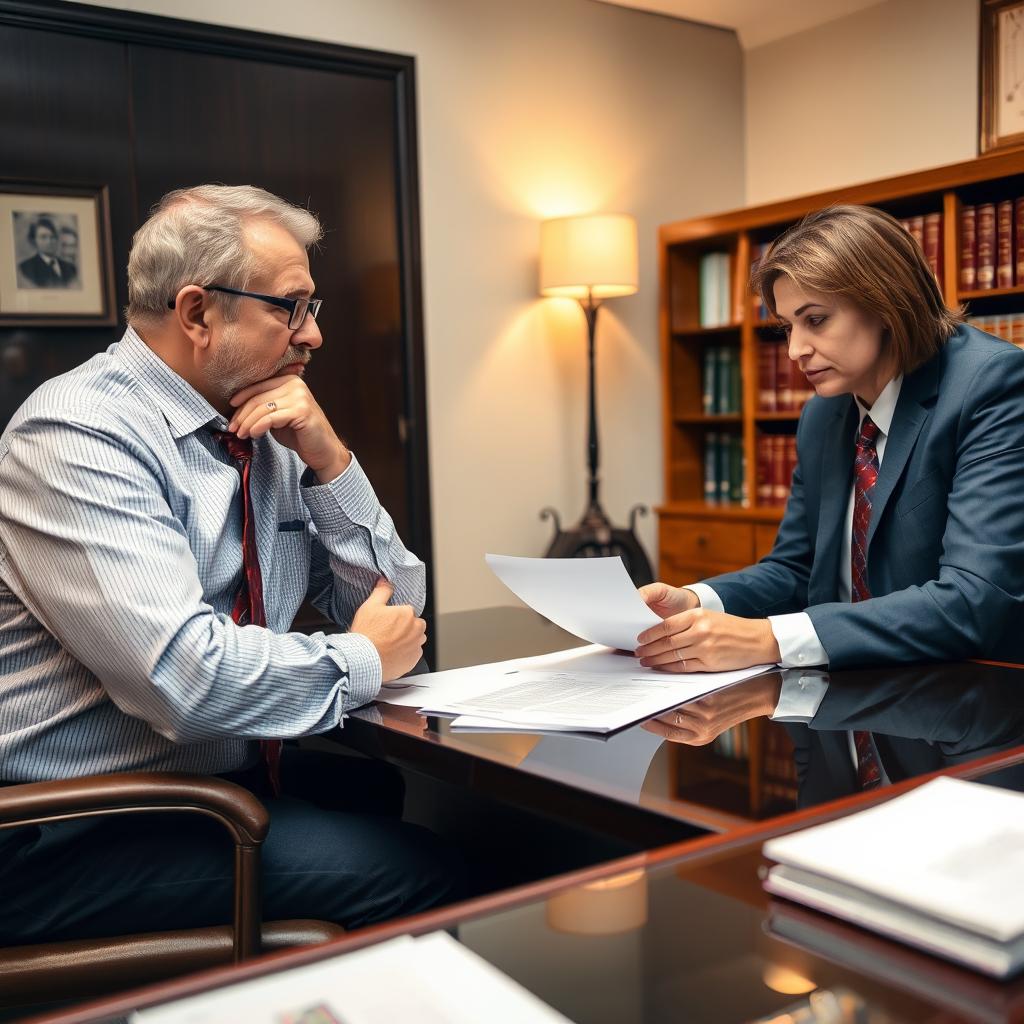
Refusal Lawyer King George County, VA
If you were arrested for DUI in King George County and refused a breath or blood test, you face a separate legal proceeding under Virginia’s implied consent law. A refusal under Va. Code § 18.2‑268.3 triggers an administrative license suspension and can be introduced at trial as evidence of consciousness of guilt. The King George County General District Court handles refusal hearings, and a finding of unreasonable refusal carries consequences that may include a one‑year license suspension, a civil penalty, and a notation on your driving record. Because the refusal proceeding is distinct from the underlying DUI charge, an experienced traffic lawyer should be protecting your interests at both stages. Mr. Sris, Owner and Founder of Law Offices Of SRIS, P.C., and his Of Counsel bring decades of combined courtroom experience to refusal defense in King George County. To discuss your matter, reach our Fairfax location at (888) 437‑7747. Law Offices Of SRIS, P.C. — Advocacy Without Borders.
What a Breath Test Refusal Means in King George County
Virginia’s implied consent statute provides that any person who operates a motor vehicle on a public highway has consented to a breath or blood test following a lawful arrest for DUI. The arresting officer must advise the driver of the consequences of refusal. If the driver then declines testing without a reasonable basis, the Virginia Division of Motor Vehicles will suspend driving privileges. A first‑offense refusal typically carries a one‑year license suspension, with no restricted license available during that period. For a second offense within ten years, the suspension extends to three years. Each case is heard at the King George County General District Court, 10446 Government Center Blvd, Ste 105, King George, VA 22485.
Beyond the administrative penalty, a refusal can complicate the underlying DUI prosecution. The Commonwealth may argue that the refusal demonstrates a consciousness of guilt, and the judge is permitted to consider the refusal when weighing the evidence. In many instances, a refusal charge can be challenged on procedural grounds—for example, whether the officer had reasonable suspicion to make the stop, whether probable cause existed for the arrest, or whether the implied consent advisory was properly administered. Mr. Sris and his Of Counsel have appeared in King George County traffic court and are familiar with how refusal charges are handled under the Virginia implied consent framework.
How Mr. Sris and His Of Counsel Handle Refusal Cases
A refusal charge is not a foregone conclusion. Law Offices Of SRIS, P.C., practices in the area of traffic defense and has particular experience with implied consent hearings. The approach begins with a thorough review of the arrest documentation, the audio or video recording of the stop, and the implied consent advisory that the officer provided. If the advisory was incomplete or misleading—for instance, if the officer failed to explain that a refusal could be used against the defendant in court—that may provide grounds to argue that the refusal was reasonable. In cases where the officer lacked probable cause to make the arrest, the entire refusal proceeding may be dismissed.
Because Mr. Sris is a former prosecutor, he understands how the Commonwealth’s side builds its case. That perspective informs every defense strategy. Combined with the extensive courtroom experience of the Of Counsel team, the firm works to identify weaknesses in the government’s case, to negotiate with prosecutors where appropriate, and to present mitigating evidence at the refusal hearing. While no attorney can guarantee a particular result, Mr. Sris and his Of Counsel work toward favorable outcomes for each client. Results may vary.
About Mr. Sris and His Of Counsel Team
Mr. Sris, Owner and Founder of Law Offices Of SRIS, P.C., has been practicing since 1997 and is admitted in Virginia, Maryland, the District of Columbia, New Jersey, and New York. His background as a former prosecutor gives him insight into how traffic and criminal charges are prosecuted. Mr. Sris testified before the Virginia House Courts of Justice Committee in support of 2019 HB 635 (chief patron Del. David Bulova), and he maintains an active multi‑state practice. The Of Counsel attorneys who handle traffic matters bring over 120 years of combined legal experience between Mr. Sris and his Of Counsel. Results may vary. They regularly appear in General District Courts throughout Northern Virginia, including King George County.
If you are facing a refusal charge, the team at Law Offices Of SRIS, P.C. can evaluate your case, explain the potential consequences, and represent you at the refusal hearing. The firm’s documented 4,739+ case outcomes across all practice areas reflect a history of advocating for clients in a wide range of matters. Results may vary. To request a consultation, call (888) 437‑7747.
Frequently Asked Questions
What is implied consent in Virginia?
Virginia’s implied consent law means that by driving, you automatically consent to a breath or blood test after a lawful DUI arrest. If you refuse, a separate civil proceeding begins that can result in license suspension. The law is designed to discourage refusals and to facilitate the gathering of chemical evidence. A refusal cannot be used against you in a criminal case unless it is found unreasonable, but it does have administrative and evidentiary consequences.
What happens if I refuse a breath test in King George County?
Your license will be suspended for one year on a first offense, and the refusal may be used as evidence in your DUI trial. The officer will submit a sworn report to the Virginia Department of Motor Vehicles, and you have a limited time to request a hearing. The hearing takes place at the King George County General District Court. If the court finds the refusal unreasonable, the suspension is upheld.
Can I fight a refusal charge?
Yes, an attorney can challenge the refusal by questioning the legality of the traffic stop, the arrest, or the implied consent advisory. Common defenses include showing that the officer did not have reasonable suspicion to pull you over, that there was no probable cause for a DUI arrest, or that the advisory you received was incomplete or inaccurate. A favorable outcome at the refusal hearing can save your driving privileges.
Do I need a lawyer for a refusal in King George County?
Because a refusal can lead to a year-long license suspension and strengthen the DUI case, consulting a traffic lawyer is highly advisable. The refusal hearing is a legal proceeding with rules of evidence. An experienced lawyer can present your side effectively, cross‑examine the arresting officer, and argue procedural defenses that you might not be aware of on your own.
How does a Virginia lawyer defend against refusal charges?
Defense strategies may involve challenging the stop, the arrest, the implied consent advisory, or any procedural errors by law enforcement. The lawyer may also introduce evidence that the refusal was reasonable—for example, if the driver had a medical condition that prevented providing a breath sample or if the officer’s conduct created confusion. A well‑prepared defense can sometimes lead to the refusal being found reasonable or to a negotiated resolution.
What happens at a refusal hearing in King George County General District Court?
The judge hears evidence on whether the refusal was unreasonable. If so, the court will order the license suspension and a civil penalty may be imposed. The hearing is civil in nature, meaning the standard of proof is lower than in a criminal case, but you still have the right to present evidence and call witnesses. An attorney can represent you throughout the process and argue on your behalf.
Fairfax County Traffic Lawyer · Fairfax City Traffic Lawyer · Falls Church Traffic Lawyer
See also: Virginia Code Title 18.2 (Crimes) · Virginia Courts
Attorney advertising. Prior results do not guarantee a similar outcome. Results may vary.
Case results depend on a variety of factors unique to each case.